

Etching lines at home
I’ve been missing having access to the beautiful, huge print room at Falmouth University where I recently finished my MA. I’ve been using a local open print studio, but the cost makes it unsustainable for regular/long-term use and for feeling like there is time to just play with new ideas. I’m also not super happy with all the petrochemical-based things that are used in traditional etching methods, including all the solvents used in the cleanup - without serious mechanical ventilation the headaches are a bit too real. So, I’ve doing a bit of research into how to do etching in a home studio in less toxic ways. This post explains what I’ve tried, what worked and what didn’t, for line etching. I’m having a go at aquatint next so that’ll follow in a later post. It’s written for myself really, so I can keep notes, but hopefully it’ll be useful for others too - I’m not sure I’d want to try this if I hadn’t already done a fair bit of traditional etching and been taught the basics by a pro…
Line etching
Cut the zinc plate to size - ‘proper’ print studios have metal guillotines, you can buy plates cut to size online, but I’ve just been using metal snips and a little dremel bandsaw fitted with a metal-cutting blade.
File the edges to a nice bevel, scrape and burnish if needed to get rid of any sharp bits.
Brasso to polish the plate.
Degrease the plate with soy sauce and whiting (which is just calcium carbonate), rinse and dry with tissue or newsprint. The salt and acidity in the soy help remove the grease, and this is a substitute for ammonia which is what’s usually used. I think a salt and vinegar mix would also work fine, but would need pre-mixing so there are no scratchy salt granules - probably vinegar alone would also work.
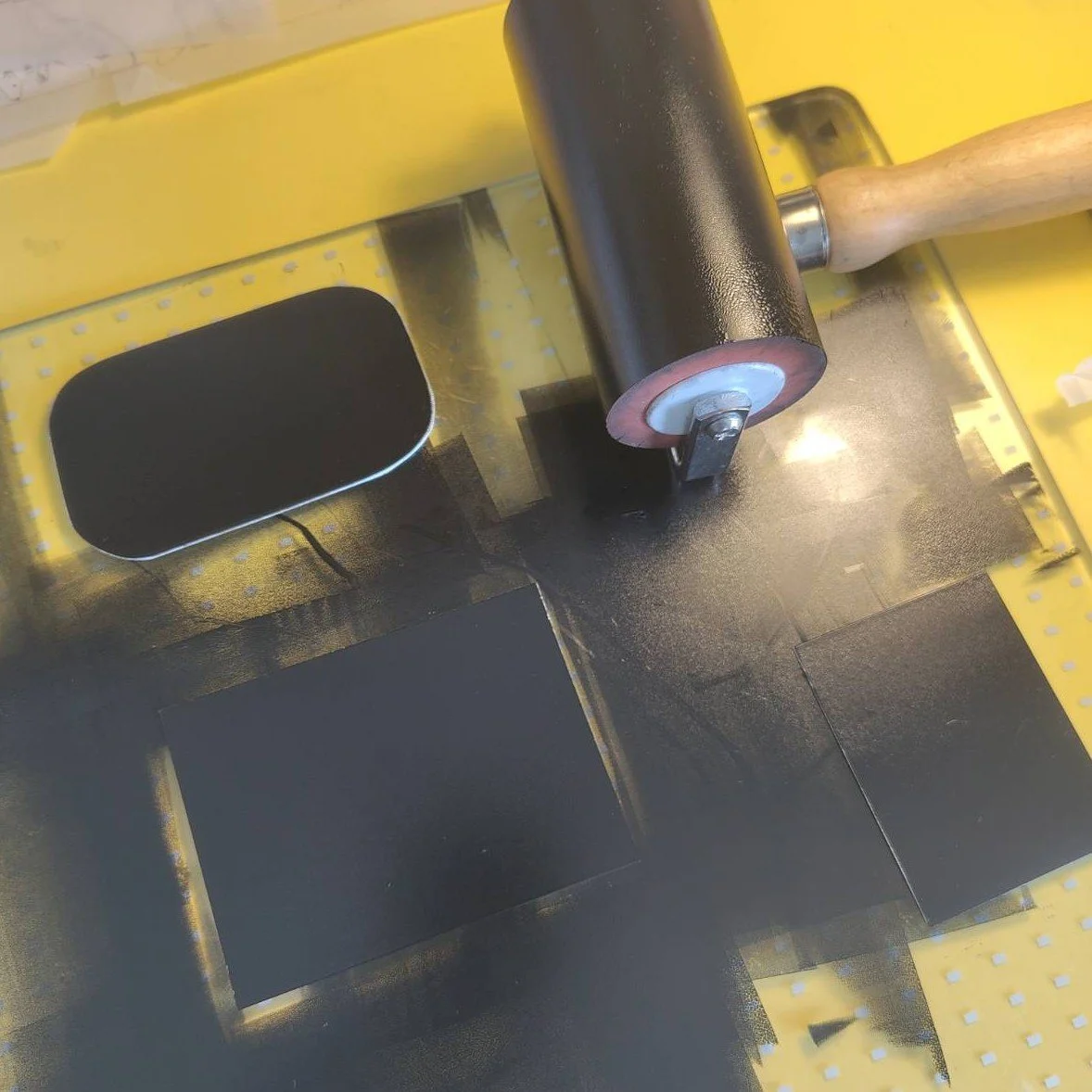
Roll the BIG ground on glass plate like you would with ink, coat the plate lightly with even strokes. Try to make sure the edges of the plate are also covered. The folks at BIG have videos online showing what this should look like. This is a substitute for both soft and hard ground (which is usually a mix of bitumen, beeswax and resin).
The BIG ground can be used as it is for soft ground (but look at their videos for that because it’s a bit more complex when it goes through the press), or for hard ground put plate in oven at 135C for 6 mins, then cool the plate.
Clean the roller with veg oil, then soapy water, then dry well.
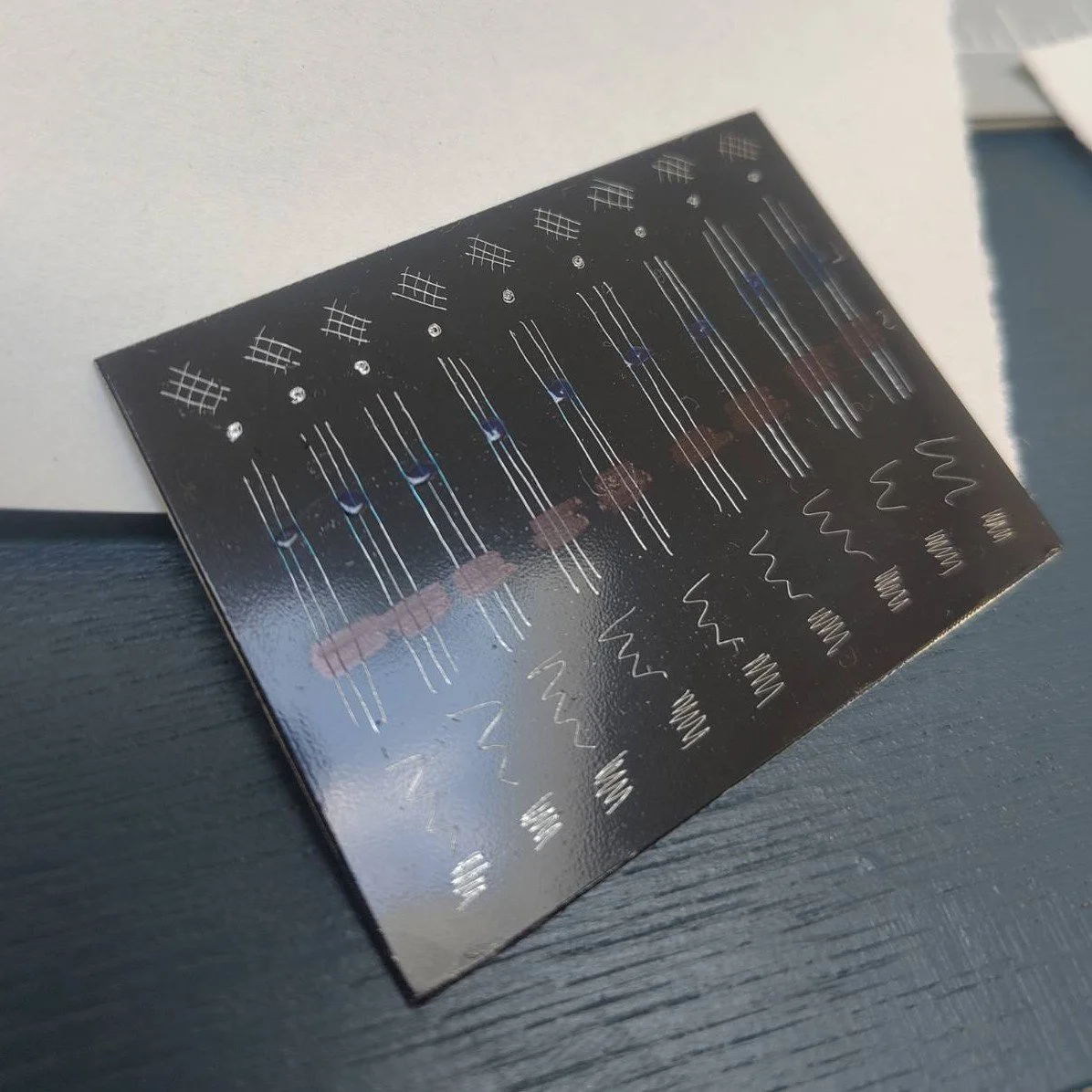
Draw into the ground with an etching needle - this feels like a thick hard ground, it doesn’t flake at all but it is possibly very slightly harder to draw through - I like it.
Cover the back of the metal - use brown packing tape or lascaux plate backing resist fluid (used like straw hat - wash lascaux brushes in soapy water). I didn’t love the lascaux resist, it takes ages to dry, and once dry it didn’t come off with white spirit or alcohol - I think they make their own remover, but maybe meths or acetone might work. Either way I’m not totally happy with the plastic (lascaux is acrylic based, and tape is plastic).
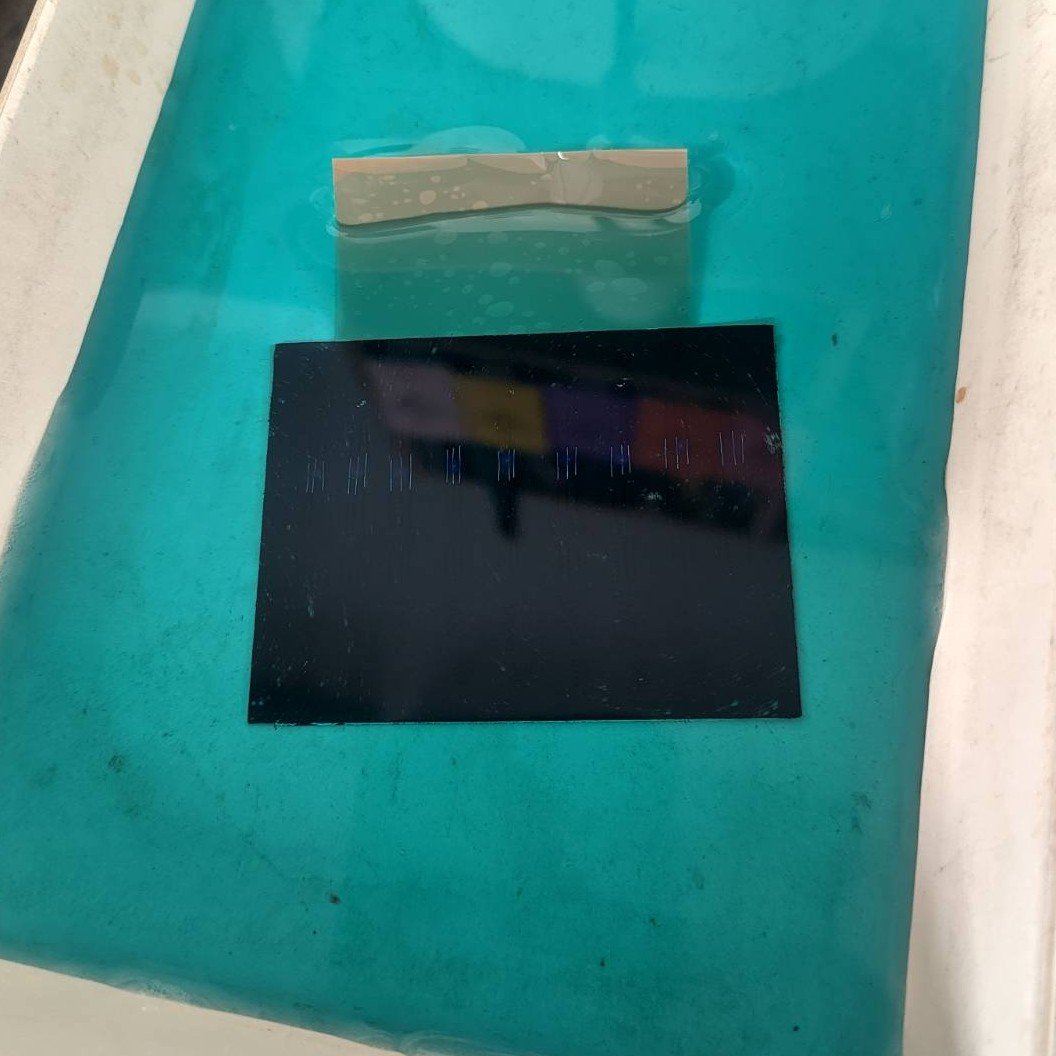
Wear a mask and gloves for mixing acid - For the acid (fast etch), mix 75g copper sulphate, 75g salt, 1 litre water.
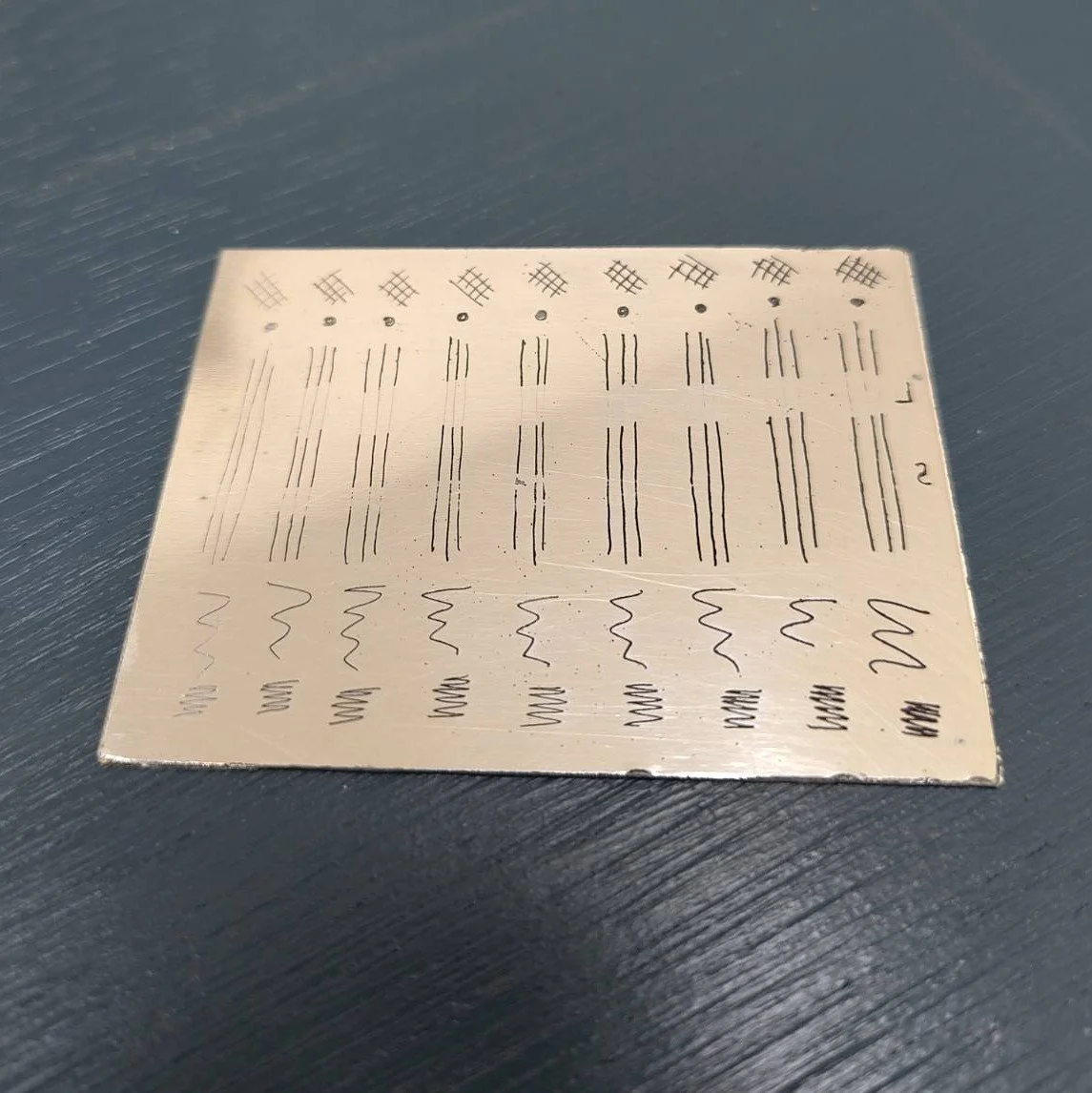
Etch for however long you want (see the test plate below 1-15 mins), keep the liquid in motion while etching as the copper sediment can settle in the lines, brush the plate non stop. Don’t be alarmed by the amount of sediment that forms - I thought the ground was failing and coming off, but it wasn’t.
Use Brasso to remove the ground.
The photos below shows lines etched (L-R) for 1, 2, 3, 5, 7, 9, 11, 13, 15 mins. You might spot a little bit of foul bite on the plate, I’m putting that down to rolling the ground in quite a dusty environment - so don’t do that :) It was a scrappy little bit of zinc (65×50mm) that wasn’t in good condition, and I didn’t bother filing the edges do that’s why they’re a bit manky.
What's actually happening
Zn + CuSO4 -> ZnSO4 + Cu (I think something more complicated happens with the salt added too - apparently this lengthens the life of the acid, but also can be more toxic… I’ll update this once I figure that out - if anyone knows those details then do get in touch and it’ll save me some digging!)
The zinc loses two electrons and the copper gains them. The copper sulphate blue colour fades as the reaction happens, turning colourless as zinc sulphate is formed. So, once the mix has lost its colour it is no use any more.
Options for stopout
On the pics above you might spot that I’ve made some attempts at stopping out the straight lines horizontal strips running across all the different bite times. The top one is Lascaux, and the lower one is Sharpie.
Lascaux (this doesn’t work nicely with BIG ground, it acts like oil in water and forms droplets that don't spread - it did resist the acid but it would be really tricky to apply in a precise way)
Sharpie (worked for about 3 mins etch no longer)
Posca (not tried yet)
Nail varnish (not tried yet)
BIG diluted with a bit of lavender oil, then baked for 4 mins (not tried yet, looking at other options first to avoid this second bake time, but I feel sure this option would work well)
Disposal
Add sodium carbonate (washing soda crystal) to neutralist it to pH 7-8 (test with indicator paper). Allow the sludgey sediment to settle. Pour off the liquid, dilute it with lots of water, and this can apparently be poured down the drain. The sludge can be dried and collected in a plastic bag, and disposed of ‘by your local authority’ (I’ll cross this bridge when I come to it, but I can’t imagine the folks at the Cornwall Council tip will know what to do with it).
I used these two sources for the disposal notes and some of the other bits, they are great if you want to read a bit more:
https://www.jacksonsart.com/amfile/file/download/file/1284/product/152583/
https://nontoxic-print.com/the-bordeaux-etch/
I’m pretty happy with the BIG ground (I’ll give this another go in a cleaner environment) and the copper sulphate etching solution, stop out needs a bit of work, and I ought to buy a nice metal file. I also really want my own etching press, but they are incredibly expensive, so if you happen to hear of a decent one going second hand please let me know! (And nope, sadly cheap ones don’t work, a pasta machine definitely doesn’t work - etchings need serious pressure otherwise they come out fuzzy and with muted tonal range).